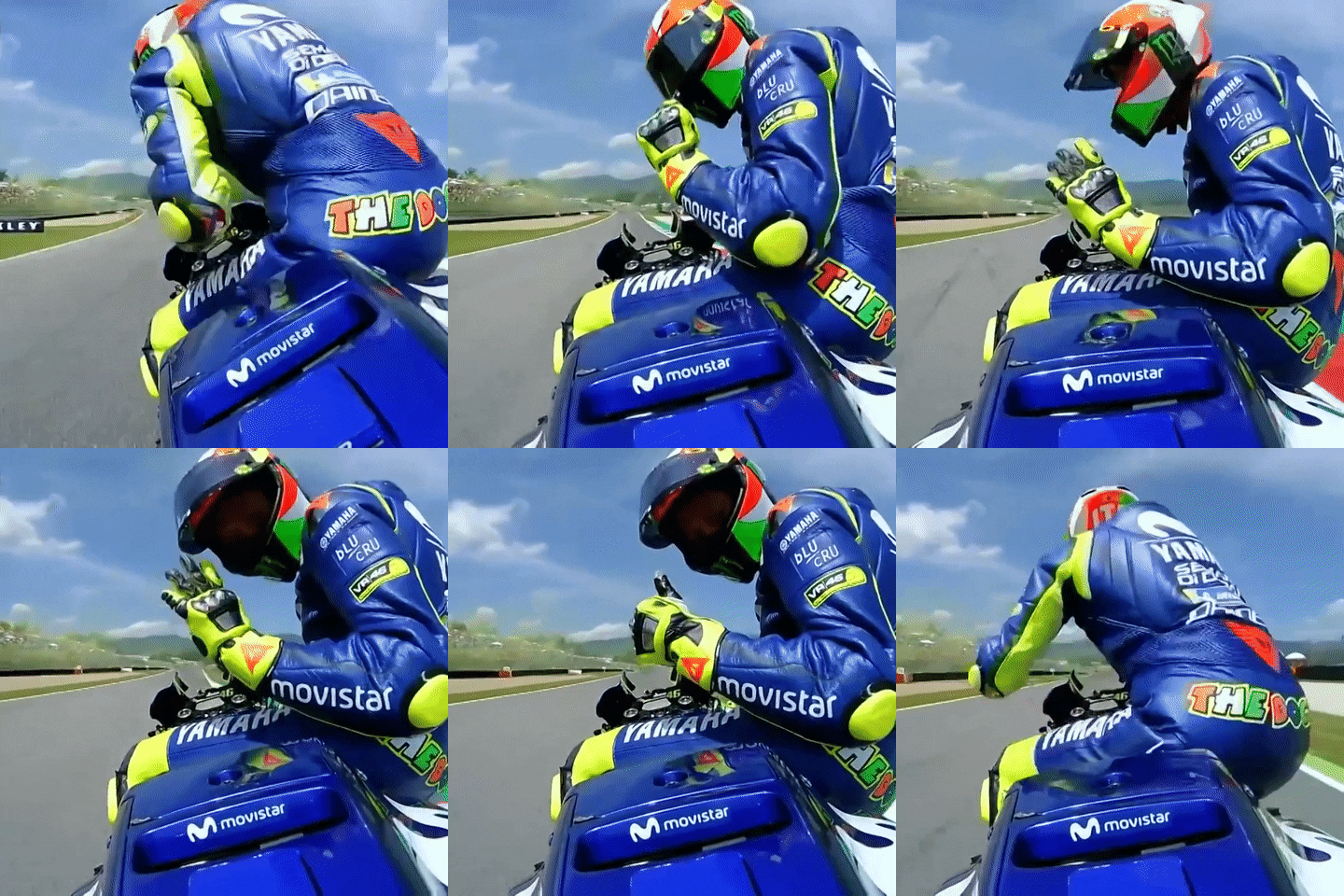

To this day I’m pretty sure if I had been born a boy my dad would have settled on naming me “Valentino”. No, we aren’t Italian and it isn’t a family name, but sitting in its own glass case on our mantle right next to the photo of me holding my baby sister is a gloriously signed MotoGP cap with Valentino Rossi’s signature scribbled on it. This nine-time Grand Prix Championship winner has left my dad and I responding with “Ya, for sure” to one another for far too long and has also left a special place in my heart for Yamaha.
While you’ll definitely catch me going 95 heading back to Chicago from my campus in my dinky little Ford Fiesta, feeling blessed for the “speeding trap” warning on Google Maps, I wish that I could experience such speeds on a motorcycle like my dad did on his Yamaha. I remember watching my dad pop a wheelie outside of my cousin’s house. I remember all the excitement as he got his Yamaha to ride faster and faster on the drag strip. I remember the first time I went riding with him. My rear end was sore for a week but, man, going fast is fun.
This special connection I have to Yamaha may not lead me to buy a “crotch rocket” as the long-distance riding fan that I am, but I knew this had to be my next feature in the Battle of the Brands.

Trailing behind many other motorcycle manufacturers, Yamaha began in 1953 just over 65 years ago. Under the directive of Yamaha Corporation President, Genichi Kawakami, the company was instructed to create a prototype motorcycle engine with the goal to launch in only one year’s time. Despite the many technical difficulties, the “Red Dragonfly” was created – sporting a two-tone red and cream color scheme, unlike the plain black bikes of their competitors. From here, the motorcycle developments only blossomed – leading Yamaha right into competitive racing by 1955 where the company celebrated an overwhelming victory at the Mt. Fuji Ascent Race.
Yamaha represents success outside of the realm of racing as well. Starting in the late 1960’s, the company sparked an initiative to promote motorcycle safety. With the rapid expansion of motorcycle ownership, Yamaha started a motorcycle safety-riding course, sparked licensure schools and requirements to promote safe riding, and held events to expose more people to riding but, more specifically, safe riding – attracting the attention of over 95 thousand people at their first Yamaha Grand Sports Festival.

The company has also led the way technologically, working on energy-saving systems back in the 1970’s with the Yamaha SX1. This bike links us back to Triumph, as the SX1was inspired by the Triumph Bonneville 650. The four stroke model of the SX1 was also a response to the Clean Air Act as this change was successful in working to reduce exhaust emissions.
As of 2017, Yamaha held 500 Grand Prix wins total. In just over 65 years this company has made great leaps in fulfilling the need for speed. What is awesome about Yamaha is that their advancements do not stop with capital gains. Many of their projects center around improving our global situation. Yamaha has been working on Biotechnology in order to harness Co2 as a resource. They have been working on ways to develop clean water supply systems in emerging markets and growing communities, and have created unmanned vehicles and helicopters to respond to natural disasters, all among a plethora of other impressive ambitions.

While I may not find myself traveling across America on a sport bike, for the sake of my poor rear end, I cannot deny that Yamaha has a special place in my heart. You will certainly never catch me rooting for Marc Marquez on his Honda during the MotoGP Season, and even though my dad sports a lot of Harley orange these days his favorite color will always be “Yamaha blue”.